- Time
- Topic
- Speaker
- Moderator
- Abdelhamid Benazzouz
- PhD
-
Research Director, Team Leader, Neurodegenerative diseases Institute, Bordeaux University
President / founder , Deep Brain Stimulation Society
E-mail:abenaz@u-bordeaux.fr
Executive Summary:
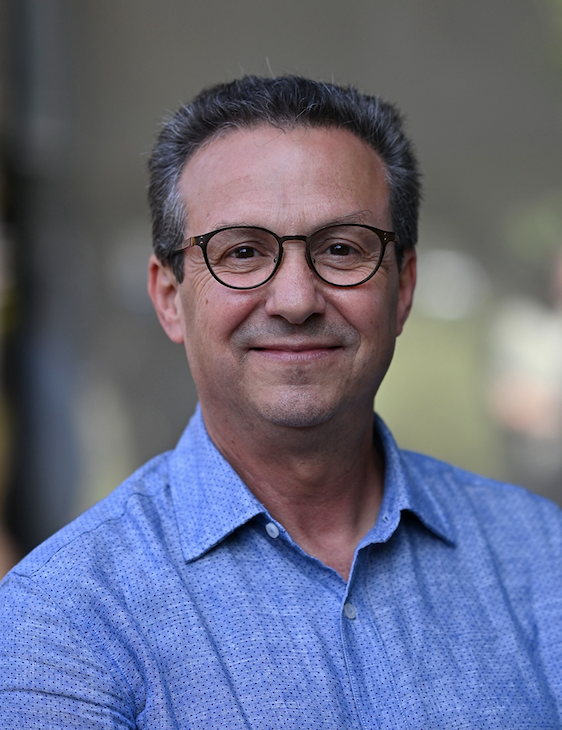
Abdelhamid Benazzouz is a Neurophysiologist Researcher employed by the Inserm Institute working in Bordeaux University. He is expert in the field of Neuroscience and especially in Parkinson’s disease. During his PhD, he pioneered in the discovery of high frequency stimulation of the subthalamic nucleus in a non-human primate model of Parkinson’s disease. Then he moved to Grenoble to participate in the transfer of this neurosurgical therapy to patients. In parallel with his hospital activity as a Neurophysiologist performing the electrophysiological mapping during surgery, he is the head of a research team investigating the functional mechanisms of DBS and the involvement of the monoaminergic systems in the pathophysiology of the non-motor symptoms of Parkinson’s disease. Abdelhamid Benazzouz was elected to be member of the National Scientific committee of CNRS (2012-2021). He co-founded two scientific Societies: The “Mediterranean Neuroscience Society” in 2009, for which he was the treasurer since 2015, and the “Deep Brain Stimulation Society” in 2021 for which he is the president Elect.
Lecture Abstract:
Deep brain stimulation (DBS) of the subthalamic nucleus (STN) is an established treatment for the motor symptoms of Parkinson’s disease (PD). Despite its clinical efficacy, the mechanisms through which high-frequency stimulation restores motor function remain incompletely understood. Increasing evidence indicates that STN-DBS does not simply inhibit STN neurons, but profoundly reshapes pathological patterns of neuronal activity within the basal ganglia–thalamo-cortical network.
A hallmark of the parkinsonian state is the emergence of excessive neuronal bursting, abnormal synchronization and enhanced beta-band oscillations within the STN and interconnected motor circuits. STN-DBS rapidly suppresses pathological burst firing and reduces excessive beta activity and synchrony, thereby disrupting abnormal temporal patterns associated with motor impairment. These effects are likely mediated by a combination of local and network mechanisms, including modulation of neuronal somatic activity, activation of axonal pathways, and interruption of pathological recurrent interactions within the basal ganglia.
Importantly, the effects of STN-DBS extend beyond the stimulated nucleus. High-frequency stimulation modifies neuronal firing and oscillatory activity throughout the basal ganglia–thalamo-cortical network and profoundly influences primary motor cortex (M1) activity. Changes in cortical firing patterns, oscillatory dynamics and cortico-subcortical communication may represent a critical component of the therapeutic response. Thus, the beneficial effects of STN-DBS may result from the reorganization of abnormal information flow across distributed motor circuits.
This presentation will review current concepts of the neurophysiological mechanisms of STN-DBS, with particular emphasis on the modulation of burst firing, beta oscillations and neuronal synchrony, and their consequences for motor cortical activity. Understanding these mechanisms is essential for refining DBS as a more precise and physiologically informed therapy for PD.