- Time
- Topic
- Speaker
- Moderator
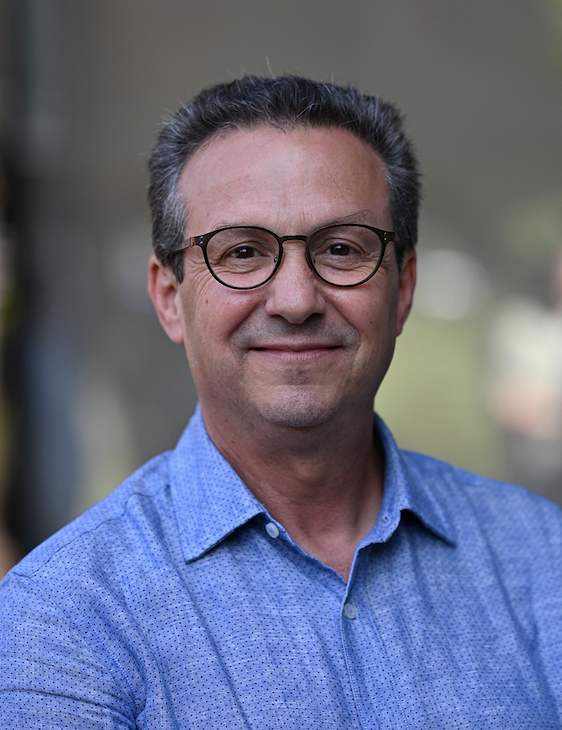
- Abdelhamid Benazzouz
- PhD
-
Research Director, Team Leader, Neurodegenerative diseases Institute, Bordeaux University
President / founder , Deep Brain Stimulation Society
E-mail:abenaz@u-bordeaux.fr
Executive Summary:
Abdelhamid Benazzouz is a Neurophysiologist Researcher employed by the Inserm Institute working in Bordeaux University. He is expert in the field of Neuroscience and especially in Parkinson’s disease. During his PhD, he pioneered in the discovery of high frequency stimulation of the subthalamic nucleus in a non-human primate model of Parkinson’s disease. Then he moved to Grenoble to participate in the transfer of this neurosurgical therapy to patients. In parallel with his hospital activity as a Neurophysiologist performing the electrophysiological mapping during surgery, he is the head of a research team investigating the functional mechanisms of DBS and the involvement of the monoaminergic systems in the pathophysiology of the non-motor symptoms of Parkinson’s disease. Abdelhamid Benazzouz was elected to be member of the National Scientific committee of CNRS (2012-2021). He co-founded two scientific Societies: The “Mediterranean Neuroscience Society” in 2009, for which he was the treasurer since 2015, and the “Deep Brain Stimulation Society” in 2021 for which he is the president Elect.
Lecture Abstract:
- Time
- Topic
- Speaker
- Moderator
- Chin-Hsien Lin
- Frontier in Patient Care: Future Direction of Advanced Therapies for Movement Disorders
-
Professor, Department of Neurology, National Taiwan University Hospital
Director, Clinical Center for Neuroscience and Behavior
Deputy Director, Department of Medical Research, National Taiwan University Hospital
E-mail:chlin@ntu.edu.tw
Lecture Abstract:
Future Direction of Advanced Therapies for Movement Disorders
Movement disorder therapeutics is shifting from symptomatic control toward intervention at the causative lesion itself, driven by gene transfer, cell replacement, and mechanism-based molecular strategies.
In Parkinson's disease, stem cell–derived dopaminergic progenitors transplanted into the putamen have shown graft survival on imaging, no graft-induced dyskinesia, and dose-dependent motor benefit sustained over three years, with phase 3 testing now underway and autologous iPSC-derived products close behind. Vector-based approaches such as AAV2-GDNF and AAV-GAD address trophic support and network dysfunction rather than dopamine deficiency alone, while genotype-stratified strategies targeting GBA1 and LRRK2, α-synuclein immunotherapy, and inflammasome inhibition advance in parallel. The negative phase 3 exenatide result offers an equally instructive lesson.
In Huntington's disease, intrastriatal AAV5-delivered microRNA has provided the first evidence that a single administration can slow clinical progression, with allele-selective antisense oligonucleotides and oral splicing modulators pursuing the same target through different routes.
In the hereditary ataxias, NRF2 activation established the first approved disease-modifying agent in Friedreich ataxia; frataxin restoration by gene transfer and protein replacement is in early clinical testing, and antisense and RNA interference platforms are progressing in the polyglutamine ataxias, with platform choice dictated by the underlying molecular mechanism.
Across all three, four constraints now matter more than target validity: delivery to the correct cell population, biomarkers sensitive enough to demonstrate slowing in slowly progressive disease, genetic diagnosis that remains unattained in most adult-onset ataxia, and the reliance on external controls that is reshaping regulatory expectations.
In this talk, I will review the current updates and future directions of advanced therapy for movement disorders.